
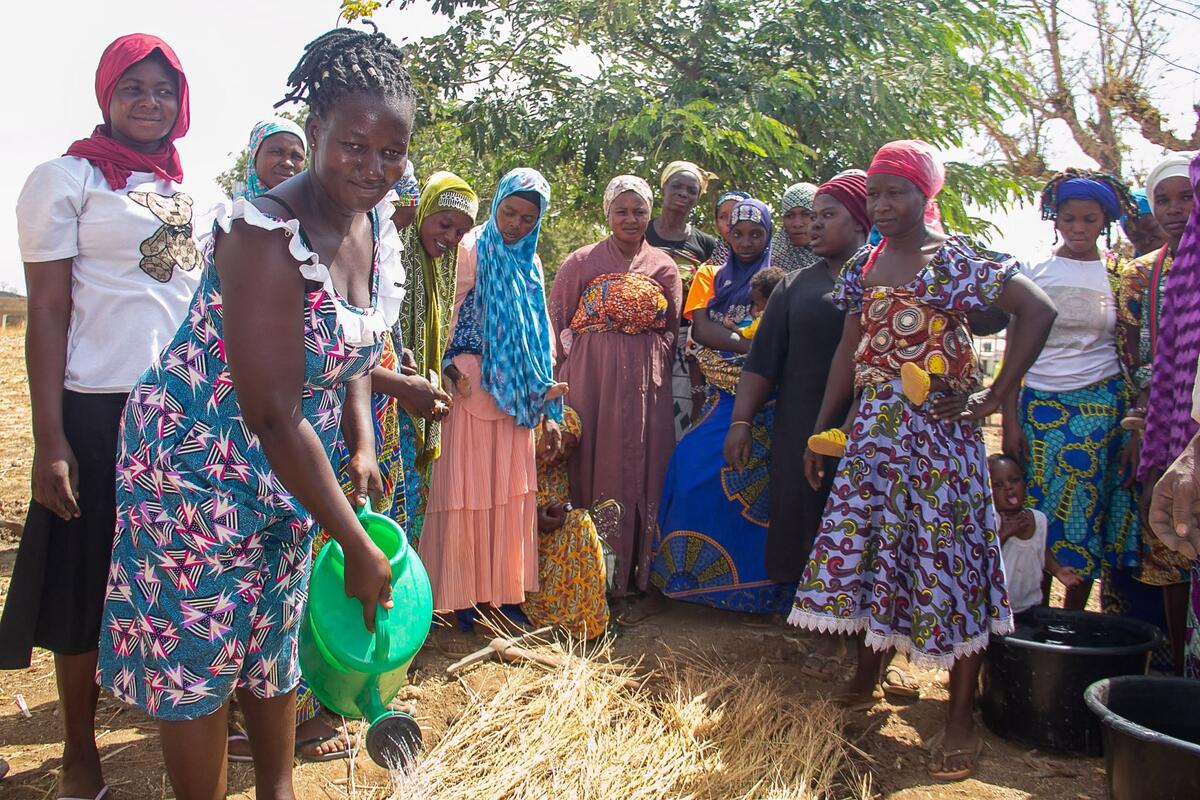
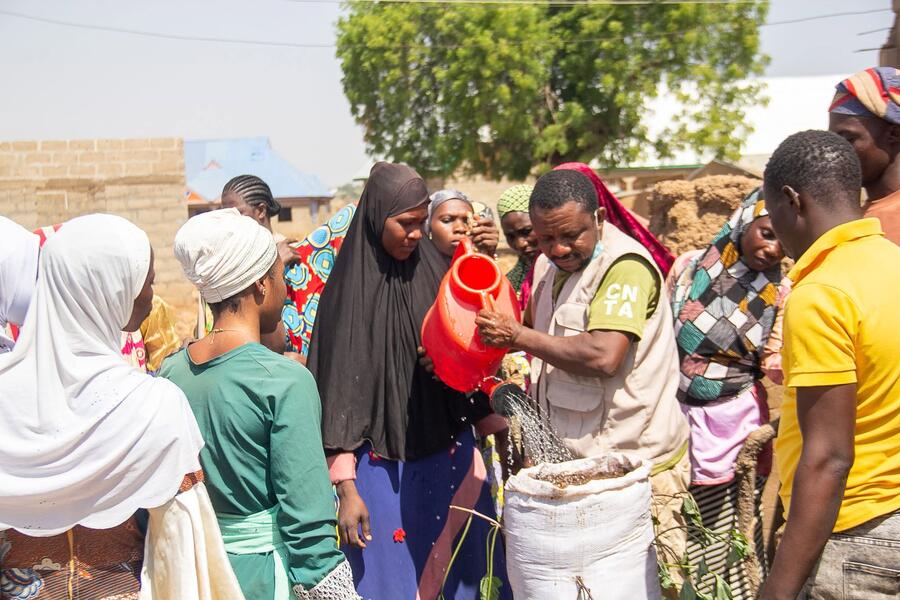
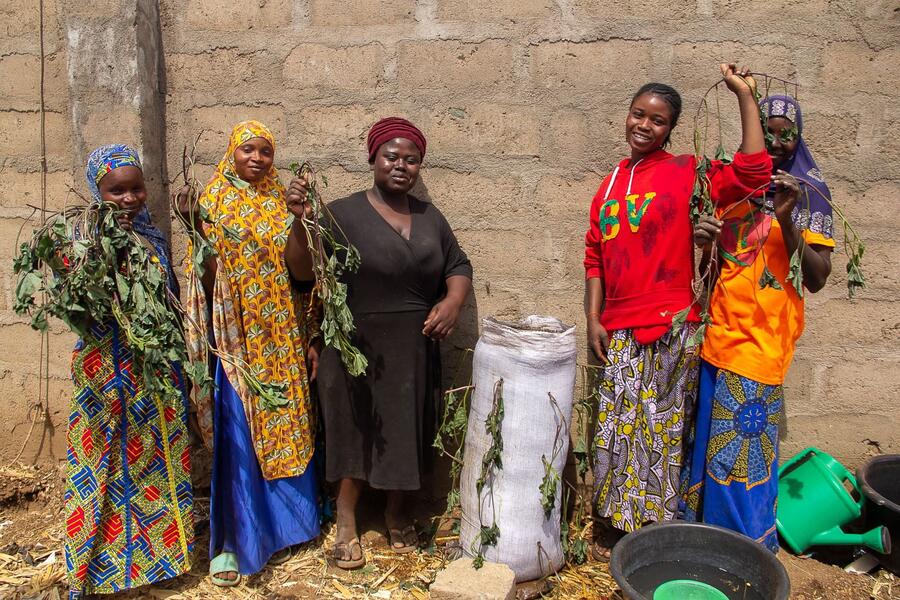
As part of the Collaborative Child Health Initiative for Life-saving and Development (CHILD) Project, NABOCADO’s Health Programmes Directorate facilitated separate training sessions for women across seven Burkinabe refugee host communities in the Upper East region of Ghana, to establish backyard vegetable gardens.
These hands on trainings serve as an enabling platform for women of reproductive age to independently set up their own home gardens to feed their children and household with nutrient-rich green leafy vegetables all year round with the focus of improving child health and nutrition.
The communities include Sapeliga- Kaare, Sapeliga-Bugla, Nangodi- Kalin, Widnaba, Kansogo, Gentiga and Yarigungu in the Bawku West, Binduri and Nabdam districts.
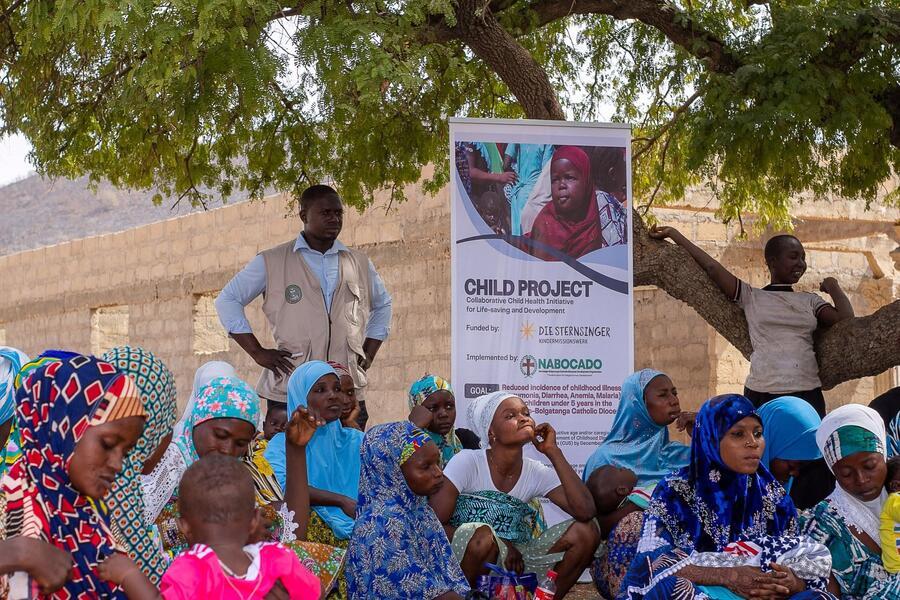
Supported by Kindermissionswerk Die Sternsinger of Germany, this intervention contributes directly to the CHILD Project’s goal of reducing the incidence of childhood illness (pneumonia, diarrhea, anemia, and malaria) among young children in the Navrongo-Bolgatanga Catholic Diocese.
The women’s strong participation and enthusiasm reflect a shared commitment to promoting better child health outcomes through sustainable, locally driven solutions
Originally posted on NABOCADO's Facebook and LinkedIn pages.